Skip to content

Home

Get started

Find what is holding you back, understand the model, learn together, or plan a first pilot. Choose the option your organization needs now; you do not need to complete them in order.

Find your blockers

Where are your blockers?

Take one recent change from idea to customer. Use these six questions with the people who did the work and the leaders who set its conditions.

A “no” or “not sure” is a place to investigate, not a verdict on your team.

processCan customer evidence change what the team builds next?

Look for a recent idea the team stopped or changed after learning from customers.

Explore process
structureCan the team improve its customer journey end to end?

Follow one change through design, code, testing and release. Where does ownership stop?

Explore structure
governanceCan the team make routine decisions within agreed guardrails?

Name the decisions it can make, the risks that need review, and who resolves exceptions.

Explore governance
fundingCan the solution change without reopening the budget?

Check whether funding supports an outcome and a stable team, or a fixed feature list.

Explore funding
alignmentCan the team explain the strategic choices behind its work?

Ask what it is choosing not to do, and how customer evidence can challenge the direction.

Explore alignment
scalingCan teams access expertise and shared services without joining another queue?

Look for coaching that builds independence and services teams can use directly.

Explore scaling
Use what you found to plan a first pilot ↓

Understand the model

The why, and the how.

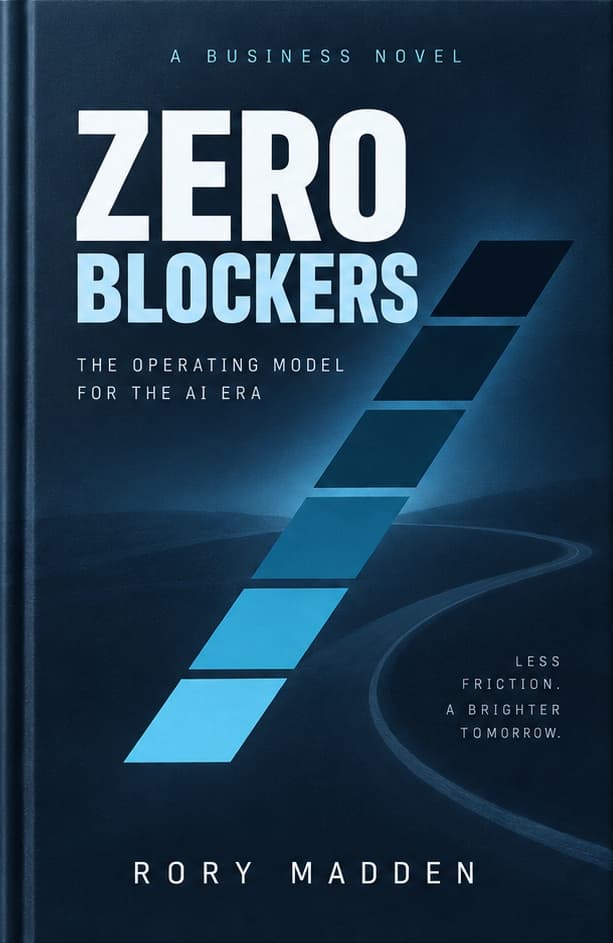
The novel makes the organizational problem tangible. The handbook explains the practices and decisions involved in changing it.

Zero Blockers novel cover

Zero Blockers

Ridgeway Airlines could build anything and still could not ship. Follow its leaders as a failed project exposes the organizational trap, and one pilot team tests a different way to work.

For product, technology, finance, and executive leaders who suspect the problem runs deeper than process.

Learn more about the novel ↗
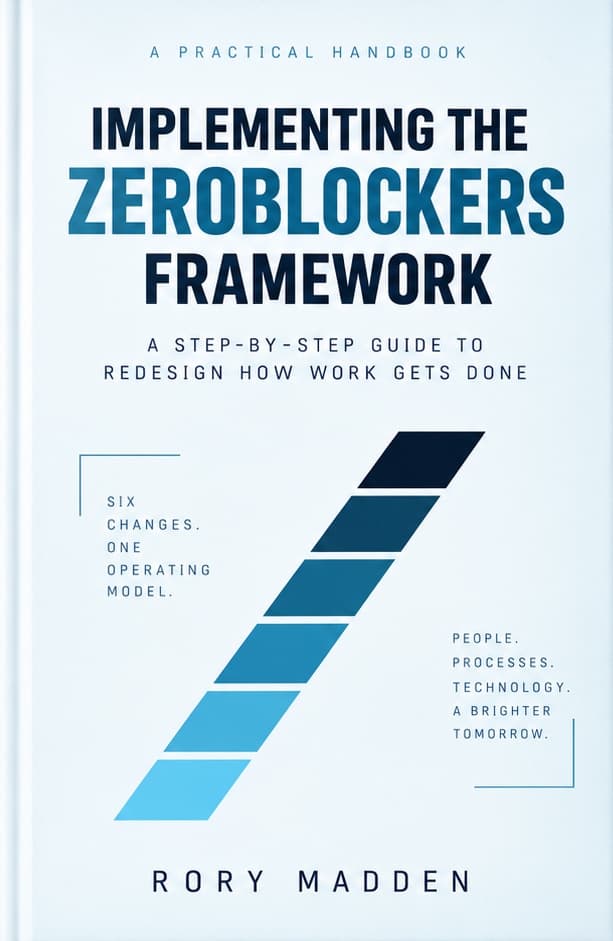
Implementing the ZeroBlockers Framework handbook cover

Implementing ZeroBlockers

A working reference for the six changes, the path from a first pilot to a scaled organization, and the objections, failure modes, and tools involved.

Written to be worked from, by the people accountable for making the change.

Learn more about the handbook ↗

Build shared understanding

Dedicated training to align your organization.

WE will provide dedicated training sessions for your team. These sessions will bring together the sponsor, product and functional leaders, delivery teams, and shared services into one learning plan. We agree the participants, courses, and format with you.

Explore company courses ↗
  • Build the foundation

    Understand the six changes, identify a customer scope, and plan the conditions for a first pilot.

  • Develop the team’s practice

    Connect customer research, design experiments, reliable delivery, and cross-functional ways of working.

  • Equip the leaders

    Work through strategy, investment, decision rights, and the support teams need to act independently.

Put it into practice

Start with one team and one customer outcome.

Avoid a big bang transformation. A pilot gives you room to test the approach, uncover missing capabilities, and adjust before extending it to more teams.

Use the blockers you identified to define a bounded pilot. Start by changing how the team works, then address the organizational conditions that hold it back as they arise. Use what you learn to decide which condition to change next.

  1. Choose the scope and direction.

    Choose one customer problem or value stream a team can own. Map the teams and handovers it touches. Check a recent team decision against the product strategy and repair any missing context. Name a sponsor who can resolve blockers beyond the team’s authority.

  2. Agree the conditions.

    Define a customer outcome and a health measure, with a baseline and a source of evidence. Agree the guardrails and decisions the team can make. Make its capacity and operating cost explicit, and agree how investment will be reviewed so the solution can change without a new project approval.

  3. Run one complete cycle.

    Follow one piece of work through research, design, build, and review together. Use customer evidence to revise the solution. Resolve the handovers, missing decision rights, and capability gaps the cycle exposes, starting with the ones that stop the team owning the outcome.

  4. Review before adding teams.

    Use short, regular reviews of outcomes and health measures to decide what to improve, replacing duplicate status reporting. Identify where temporary coaching is needed and which shared capabilities should become self-service products. Add another team only when its scope, dependencies, and support are clear.

Get support where you need it.

Work through readiness, the first pilot, or expansion with us. You do not need to read the books or complete training before talking. We will help you decide what your organization needs next.